Recommended Kits
The plug-in solar kits we’d actually buy.
These are the plug-in solar kits we’d spend our own money on right now, picked on four things: what an independent lab has actually certified, the price per watt, whether you can get one shipped to your state, and whether a real company stands behind it. Five kits clear that bar today, and each one is the right answer for a different kind of home. We haven’t lab-tested them ourselves; we read the certifications, spec sheets, prices and fine print so you don’t have to.
Prices, stock and certifications checked November 4, 2026
Disclosure: the kit links on this page don’t earn us a commission right now. The small-gear links further down are Amazon affiliate links, so we may earn a little if you buy through them. Neither changes which kits we pick or how we describe them.
Good
Yes
$15/mo
Not sure which kit fits your setup? Check your exact address.
Put in your ZIP code or address and the Solarly Advisor checks your state’s law, estimates what a panel would make where you live, and suggests the kind of kit that fits your home, all in about 30 seconds.
| Kit | Best for | Price | Per watt | Ships to | |
|---|---|---|---|---|---|
| US Solar Supplier 880WBest value | The lowest price per watt, if you can mount two full-size panels | $629 | $0.71 | No state limits listed | Details ↓ |
| Bright Saver 180W or 360WEasiest start | Balcony railings and first-timers who want a light, small kit | $299 or $432 + $29 membership | $1.20 to $1.66 | UT, VA, CO, MD, CT, NH, NJ | Details ↓ |
| US Solar Supplier 1180WMost output | Patios, yards and flat roofs with room for big panels | $899 | $0.76 | No state limits listed | Details ↓ |
| Mango Power S 1,200WBiggest certified | Yards and patios, with a zero-export gateway for states without a law | $2,698 | $2.25 | No state limits listed | Details ↓ |
| CraftStrom 800WNo law in your state | States without a plug-in solar law yet | $2,031 | $2.54 | No state limits listed | Details ↓ |
Per watt is the price divided by the panels’ rated watts. Bright Saver’s range covers the one- and two-panel kits, before the $29 membership.
US Solar Supplier 880W Hoymiles Kit
Best for: Anyone with room for two full-size panels, on a sturdy railing, a patio or a yard, who wants the most solar for the money.
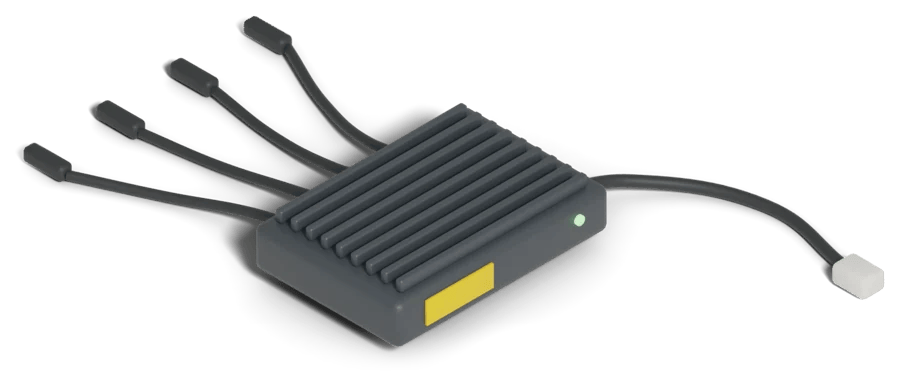
Two 440-watt Hanersun bifacial panels, each paired with its own Hoymiles HiFlow Pro LV microinverter (model HMS-360-1WM-LV). That’s the microinverter that became the first in the world to earn a UL 3700 certification in July 2026, the same one inside Bright Saver’s kit. Each 360-watt unit has its own plug, so together they send up to 720 watts into your home. At about 71 cents a watt, it’s the best value we’ve found by a wide margin!
- Microinverter certified to UL 3700 (as a component) and UL 1741
- Up to 720 watts from two independent 360-watt units
- Bifacial panels with a 25-year product and 30-year power warranty
- Sold by US Solar Supplier, which ships from Louisville, Kentucky
- Mounting hardware isn’t included; budget extra for brackets
- These are full-size glass panels, too big and heavy for many balcony railings
- It’s two plug-in devices. Connecticut, Maryland, New Hampshire and Colorado allow one per meter or address, so use one unit there or ask your utility
- In stock when we checked, with shipping expected November 6 to 13
720W AC output
Hoymiles HiFlow Pro LV
2 plugs
Bright Saver Balcony Solar Kit
Best for: Renters and first-timers with a balcony railing, and anyone who wants the simplest, safest place to start.
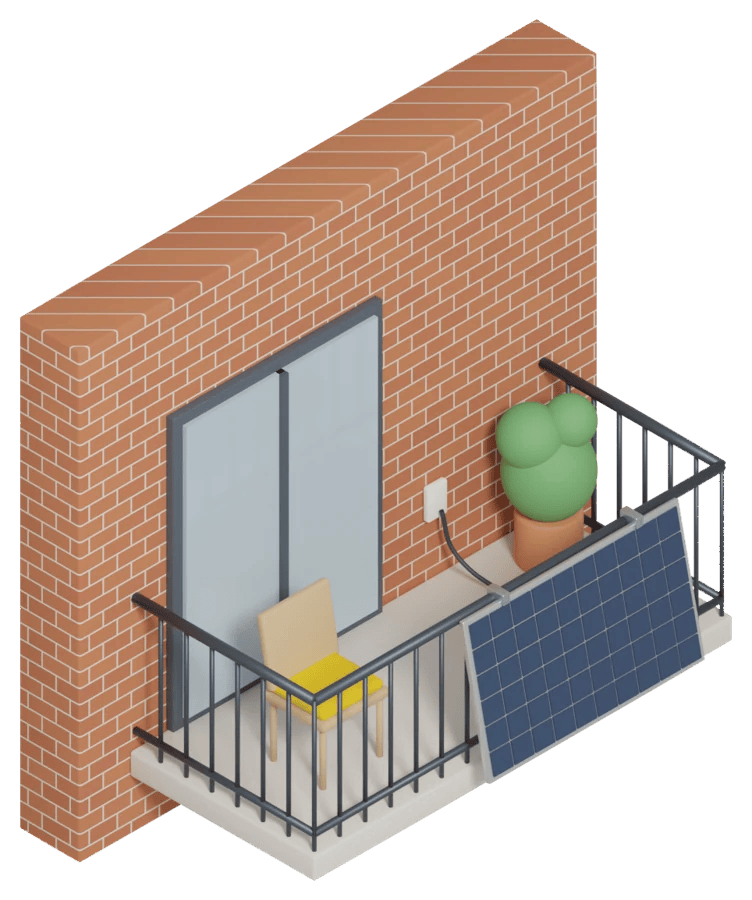
Bright Saver is a California nonprofit that sells its kit at exactly what it costs them, and publishes the line-by-line cost to prove it. You get one or two lightweight, glass-free 180-watt panels (11 pounds each, 46 by 34 inches) that zip-tie to a railing, the same UL 3700-certified Hoymiles microinverter, and a 15-foot cord. The kit tops out at 360 watts on purpose: that fits inside the spare headroom a standard 15-amp household circuit already has, so you can plug it into an ordinary outdoor outlet.
- Light enough to hang on almost any balcony railing
- Microinverter certified to UL 3700 (as a component) and UL 1741, with a 12-year warranty
- Sized to sit safely on a shared household circuit
- Free shipping, and you keep the panels even if your membership lapses
- Ships only to Utah, Virginia, Colorado, Maryland, Connecticut, New Hampshire and New Jersey; California, Maine and Vermont can reserve one until a fully certified kit exists
- In stock when we checked, with orders shipping within about a week
- Small output, so the savings are modest
Glass-free panels
Hoymiles HiFlow Pro LV
15 ft cord
US Solar Supplier 1180W APsystems Kit
Best for: Homes with a sunny patio, yard or flat roof that want the biggest production a plug-in system can legally make in most states.
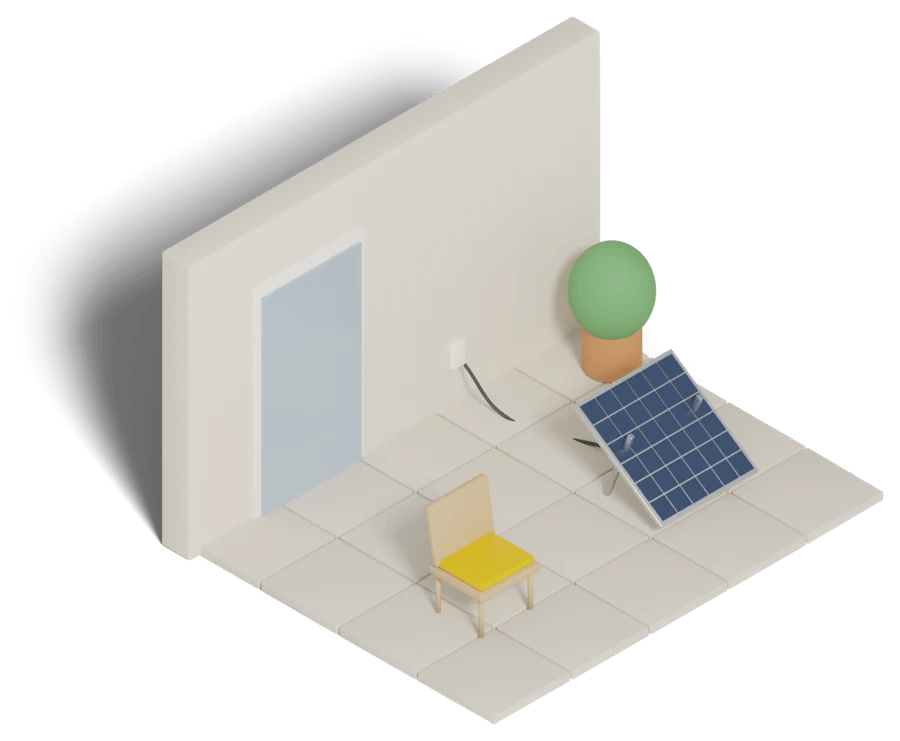
Two 590-watt Hanersun bifacial panels feed one APsystems EZ1-LV microinverter that sends up to 900 watts into your home through a single plug. The EZ1-LV was reported certified to UL 3700 by CSA Group in July 2026, and it’s the same dual-input microinverter that sat inside our previous top pick, which has since sold out. Production per dollar is nearly as good as our best-value pick, from one tidy plug-in device.
- One plug-in device, up to 900 watts, under the 1,200-watt limit in most state laws
- EZ1-LV microinverter reported UL 3700 certified, with a 12-year warranty
- Dual inputs, so shade on one panel doesn’t drag down the other
- Pairs with IntegraRack ground and patio mounts, sold separately
- These are big, heavy panels, about 68 pounds each; this is not a balcony-railing kit
- At 900 watts, use an outlet on a circuit that isn’t already busy, and in Maine anything over 420 watts needs an electrician and a dedicated circuit
- Ships by freight on a pallet, and the carrier calls to schedule delivery; in stock when we checked, with shipping expected November 11 to 18
900W AC output
APsystems EZ1-LV
1 plug
Mango Power S 1,200W Zero-Export Kit
Best for: Homeowners with a sunny yard or patio who want the biggest certified kit we’ve found, in a state with a plug-in law or without one.
Mango Power sells this as one complete kit: four 300-watt panels, each with its own small microinverter, joined by a single trunk cable to one plug, plus stands and a Smart Gateway Lite that installs at your breaker panel, watches your home’s use and holds what flows back to the grid at zero. In September 2026, Intertek certified Mango’s microinverters to UL 3700, making Mango the third company to earn that mark, after Hoymiles and APsystems. It’s the only kit here that pairs UL 3700 certified hardware with zero-export!
- Microinverters certified to UL 3700 by Intertek (as components), plus UL 1741 and IEEE 1547
- Zero-export gateway included, for states without a plug-in solar law
- One microinverter per panel, so shade on one doesn’t drag down the others
- 25-year warranty on the panels and microinverters
- Four rigid panels at about 42 pounds each: a yard or patio kit, not a railing kit
- Up to 1,120 watts, so use an outlet on a circuit that isn’t already busy; in Maine anything over 420 watts needs an electrician and a dedicated circuit
- The gateway installs at your breaker panel, and Mango itself says only Utah lets you skip your utility entirely. It’s also new, with very few owner reviews yet
Zero-export gateway
4 microinverters
1 plug
CraftStrom 800W Zero-Export Kit
Best for: Anyone in a state that hasn’t passed a plug-in solar law yet, who wants a system designed never to send power back to the grid.
CraftStrom, a Houston company, pairs four 200-watt bifacial panels with a PowerMeter that watches your home’s electricity use and turns the inverters down so the system never produces more than you’re using. Because nothing flows back to the grid, CraftStrom says the kit can be used in all 50 states. That design is exactly why it costs more: you’re paying for the metering hardware, not more solar.
- Zero-export design: built never to push power onto the grid
- ETL-listed inverters
- Bifacial panels pick up reflected light from bright patios and walls
- The priciest kit here per watt, at about $2.54
- CraftStrom calls it UL 3700 compliant; a lab hasn’t certified it to UL 3700 yet
- Zero-export still isn’t a legal guarantee everywhere, so check with your utility
- Savings are lower if your home uses little power during the day
Zero-export PowerMeter
Bifacial
Ships from Houston, TX
Before you plug in
The small gear we’d add to any kit
None of this is glamorous, but it’s what turns a box of panels into a safe, tidy setup.
An in-use outlet cover
Bright Saver asks for a GFCI outlet with a weatherproof in-use cover, the bubble kind that stays closed with a cord plugged in. If yours has a flat flip lid, this is an easy swap.
A GFCI outlet tester
A plug-in tester confirms your outdoor outlet is wired right and that its GFCI actually trips, before you plug a panel into it.
A heavy-duty outdoor cord
Plug straight into the wall when you can. If the kit’s cord won’t reach, use a grounded, outdoor-rated cord rated for 15 amps, and never a power strip.
Tilt mounts for full-size panels
Both US Solar Supplier kits ship without mounting. Adjustable tilt brackets angle panels toward the sun on a patio, yard or flat roof, which can add a lot of output over a flat lay.
These are Amazon affiliate links: we may earn a small commission if you buy through them, at no cost to you.
Which kit fits your state?
Every plug-in solar law caps how big a system can be, and a few add their own rules. Here’s the short version; the state law tracker has the details.
- Utah, Connecticut, New Hampshire, Virginia, Colorado and New Jersey: any of the first four kits. In Virginia, file the utility’s form before you plug in. Connecticut and New Hampshire allow one device per meter and Colorado one per address, so use one plug there. Virginia and New Hampshire start January 1, 2027, and New Jersey on March 1, 2027.
- Maryland: one system per meter, and you tell your utility before you install. Systems at or below 391 watts, like Bright Saver’s two-panel kit, are spared listing rules that could otherwise call for wiring changes.
- California, Maine and Vermont: California’s law asks for equipment certified as a complete plug-in system, and Bright Saver reads Maine’s and Vermont’s the same way. No kit has that whole-system certification yet, so Bright Saver isn’t shipping there, though you can reserve one. California’s law starts January 1, 2027, with fully qualifying kits expected around spring 2027. In Maine, anything over 420 watts also needs a licensed electrician.
- Every other state: no law protects you yet, so a zero-export kit is the cautious choice: Mango Power for a yard, CraftStrom for lighter panels, or wait for your state to act. New York’s bill is waiting on the governor.
What we check before we recommend a kit
- Certification you can verify. Every kit here uses inverters listed by a recognized lab to the safety rules for grid-connected inverters (UL 1741, or ETL listing in CraftStrom’s case). The Hoymiles HiFlow Pro LV, the APsystems EZ1-LV and Mango Power’s microinverters have also been certified to UL 3700, the new plug-in solar standard, as components. No boxed kit has been certified as a complete system yet, and “compliant” on a product page isn’t the same as certified.
- Price per watt. It’s the fairest way to compare kits of different sizes. Our picks run from about 71 cents to $2.54 a watt.
- A safe fit for a household circuit. Smaller is easier: 360 watts fits the headroom a standard circuit already has. Bigger kits are allowed under most state laws, but use an outlet on a circuit that isn’t already busy.
- A real company and real stock. We check that the seller is reachable, the warranty is written down, and the kit can actually ship to you.
Kits we looked at and passed on, for now
- PLUGGEDSOLAR 800W on Amazon. We used to list it for the convenience of an Amazon checkout. When we checked, it carried a 3.3-star rating from 29 reviews, a $149 delivery charge on top of $1,395, and a listing that still advertises the 30% federal tax credit, which ended for systems you own at the end of 2025. Our other picks are better value and better documented.
- US Solar Supplier 810W Balcony Kit. Our previous top pick is sold out. Its replacement on this page uses the same EZ1 microinverter with bigger panels.
- EcoFlow STREAM. A polished system with a battery option, and EcoFlow now says installation is allowed in Utah, Maryland, Connecticut and Colorado, but we haven’t found a UL 3700 certification for it yet. Plug-in batteries also need more than a wall outlet under most US rules today.
- European balcony batteries and big kits. Many of the products you’ll see in reviews are built for Europe’s 800-watt rules and 230-volt outlets, and aren’t sold or certified for US homes.
Plug-in solar kit questions, answered
Do I need a UL 3700 certified kit?
It depends on your state. California’s law asks for equipment certified as a complete plug-in system, and Bright Saver reads Maine’s and Vermont’s the same way. No boxed kit has that whole-system certification yet. Most other laws ask for equipment listed by a recognized lab, and a kit built on a UL 3700 certified microinverter, like the Hoymiles, APsystems and Mango Power units above, is the strongest choice available today. The state tracker has the rule where you live.
How many watts can I plug in?
Most state laws cap a plug-in system at 1,200 watts per home, and Colorado allows 1,920. Maine asks for an electrician and a dedicated circuit above 420 watts. On an ordinary shared household circuit, about 360 watts fits the headroom the circuit already has; bigger kits are best on an outlet whose circuit isn’t already busy.
Can I use one plug or two?
Connecticut, Maryland and New Hampshire allow one plug-in device per meter, and Colorado one per address. Our best-value kit plugs in as two separate devices, so in those states you’d connect one unit or ask your utility first. The other kits on this page use a single plug.
Can I plug a kit into an extension cord or power strip?
A wall outlet is best. If the cord won’t reach, use a heavy-duty, outdoor-rated, grounded extension cord rated for at least 15 amps. Never use a power strip: they aren’t built for power flowing in from a solar panel.
Will a plug-in kit keep my lights on in an outage?
No. Every certified microinverter shuts off the moment the grid goes down, so it can’t send power onto lines a utility worker might be repairing. Backup power takes a battery system, which is a different purchase.
What does zero-export mean?
A zero-export kit adds a small meter at your breaker panel that watches what your home is using and turns the panels down so nothing flows back to the grid. It’s the cautious choice in states without a plug-in law, though it still isn’t a legal guarantee everywhere, so check with your utility.
We update this page as the market moves, and we date every check. Follow the market in The Current →
Not sure how much you’d actually save?
The Solarly Advisor uses NREL’s solar model for your exact location and your state’s electricity price to estimate what a plug-in kit would save you. It takes about 30 seconds and never asks for your email.

