
5 min read
California · SB 868 · June 2026
Senate Bill 868 would let California retailers sell plug-in solar kits off the shelf: no utility sign-off, no electrician, no permits. It passed a key committee with zero votes against it, then sailed through the full Senate 35–1. Here’s what it does, what it doesn’t do, and what happens next.
What the bill actually does
SB 868, authored by state Sen. Scott Wiener, would do two things. First, it would let large retailers (think Costco, IKEA, Home Depot) sell plug-in solar kits directly to consumers. Second, and more importantly, it would let Californians use those kits without going through their utility company. You buy it, you plug it in, you start reducing your bill. PG&E doesn’t get a vote.
The bill cleared the Assembly Utilities and Energy Committee with zero opposition, a meaningful signal in a political environment where utility legislation usually draws fierce lobbying. It then passed the full Senate 35–1. It now heads to the Assembly Appropriations Committee, and if it clears that, to a floor vote and then to the governor’s desk.
This is not law yet. But the trajectory looks unusually clean.
The savings math: what to actually expect
The bill’s supporters cite savings of around $20 a month per household. That number is in the right ballpark for California, which has some of the highest electricity rates in the country, around $0.25–$0.32/kWh depending on your tier and utility.
Here’s how the math works: a standard 400W panel in California produces roughly 55–65 kWh per month, depending on orientation and location. At $0.25/kWh, that’s about $14–$16 per month in offset electricity. At California’s higher rate tiers (PG&E’s Tier 2 can exceed $0.40/kWh), a single panel could save $22–$26/month. The $20 figure isn’t marketing spin; it’s conservative for much of the state.
| Monthly output | ~55–65 kWh |
| Avg PG&E rate (Tier 1) | ~$0.25/kWh |
| Monthly savings (conservative) | $14–$16/mo |
| Monthly savings (higher tiers) | $22–$26/mo |
| Payback period (small kit, $500) | ~2–3 years |
What you’d actually buy
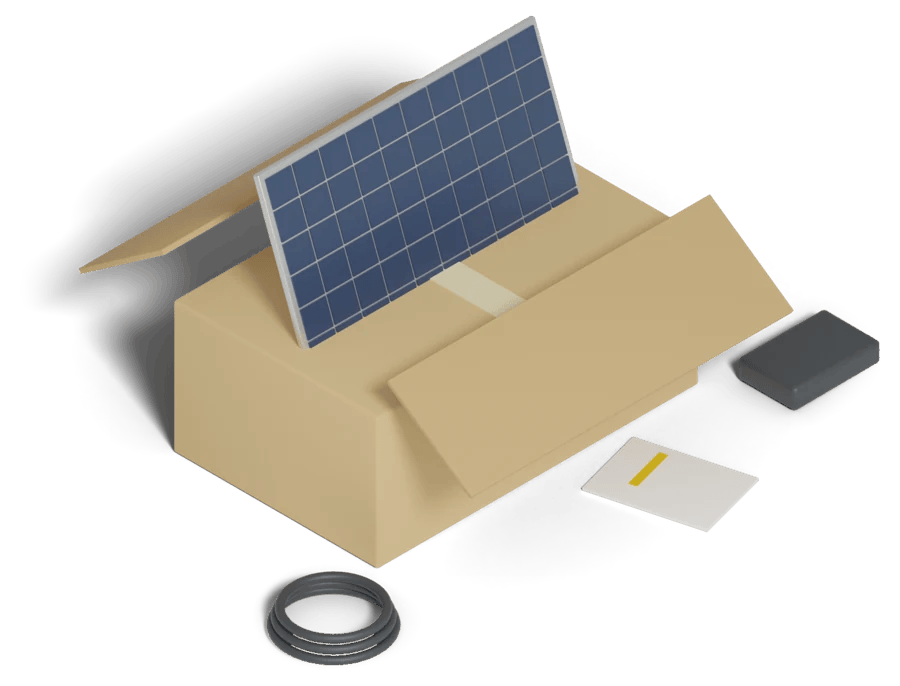
The bill envisions two tiers of kit. Smaller systems (around $500, roughly the footprint of a coffee table) can power a refrigerator, a laptop, and your modem and Wi-Fi router. That’s a meaningful slice of your home’s baseload: the stuff that runs 24 hours a day and quietly drives your bill up.
Larger systems, up to $2,500, are closer to a full desk in size and can power more energy-intensive appliances including air conditioning, which matters a lot in the Central Valley and inland Southern California, where AC bills in summer can be punishing. These aren’t aspirational numbers; they’re what’s already being sold in Europe, where Germany alone now has over 1.5 million registered balcony solar units.
The PG&E situation
PG&E initially opposed plug-in solar legislation. Their position has “loosened,” according to Bernadette Del Chiaro of the Environmental Working Group, which is a main sponsor of the bill, but the utility has asked to remain a required middleman in the process, citing safety concerns.
Supporters of the bill are skeptical of that framing. The kits that would be sold under SB 868 would be required to carry UL 1741 certification, the established US safety standard for grid-connected inverters, which mandates automatic anti-islanding shutoff, overload protection, and automatic disconnect. (A newer standard written specifically for plug-in solar, UL 3700, launched in early 2026, but no products have completed certification under it yet.) Requiring consumers to additionally notify or obtain permission from their utility before plugging in a certified device (something you’re not required to do with any other appliance) is, as one advocate put it, “a crazy idea.”
PG&E’s spokesperson said the company supports “expanding access to clean energy” and has worked with Wiener on amendments to reinforce safety protocols. The amended bill passed committee unanimously. That suggests the utility got some of what it wanted, though the details of those amendments matter and are worth watching as the bill moves forward.
Why this matters for renters specifically
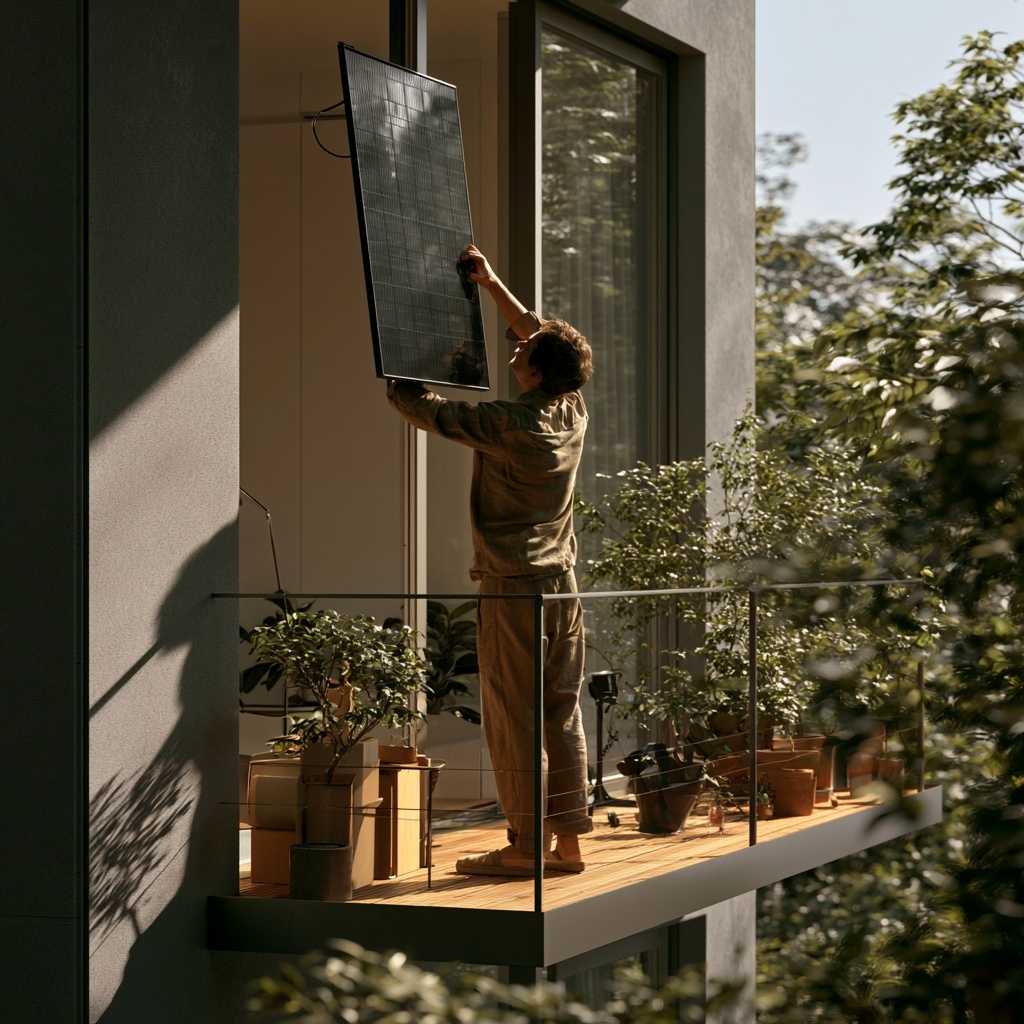
Most solar options require owning your home. Rooftop systems require a qualifying roof and an installer. Community solar programs are oversubscribed and geographically limited. Plug-in solar is the first solar option that works for renters at scale: it requires no permanent installation, moves with you when you leave, and under this bill would require nothing from your utility.
Roughly 44% of California households rent. That’s about 5.7 million renter households, the vast majority of whom currently have no practical solar option. SB 868 is aimed directly at them.
The bigger picture
The bill was inspired by Utah, which passed its own plug-in solar access law in 2025. Colorado, Virginia, Maine, and Maryland have all enacted laws since. California would be the largest state to move on this by far, and given the state’s tendency to set a policy template that others follow, a signing would likely accelerate the national rollout significantly.
The European comparison is instructive: Germany now has over 1.5 million registered balcony solar units. The Netherlands, Austria, and Switzerland have all made plug-in solar legally simple. The US is running roughly five years behind, and California is now in a position to close that gap faster than anyone expected.
What happens next
- Assembly Appropriations Committee: This is where most bills stall, usually over cost. The fiscal impact here is modest (no state expenditure required), so it’s not an obvious kill point.
- Fall 2026: Full Assembly floor vote, then Senate concurrence on amendments.
- October 2026 deadline: Gov. Newsom signs or vetoes. He’s been aggressive on clean energy; the political case for signing is strong.
We’ll update this piece when the Appropriations Committee vote is scheduled. If you’re in California and want to know what plug-in solar would save you right now (before any bill passes), the savings calculator works today, and our state law guide covers what’s already legal in California.
Primary source: SB 868 bill text, California Legislature. Reported by Anabel Sosa, SFGate, June 18, 2026.



Leave a comment