
← The Current · September 2, 2026 · Guides · 8 min read
It’s the first question everyone asks, and it hides a lovely little trick: a plug-in solar panel doesn’t power any one thing. Plug it in and its electricity joins your home’s supply, flowing to whatever happens to be running — the fridge mid-hum, the router, your phone charger. You don’t choose. The house does. So the real question is a better one: what does a day of sunshine buy? We ran the numbers.
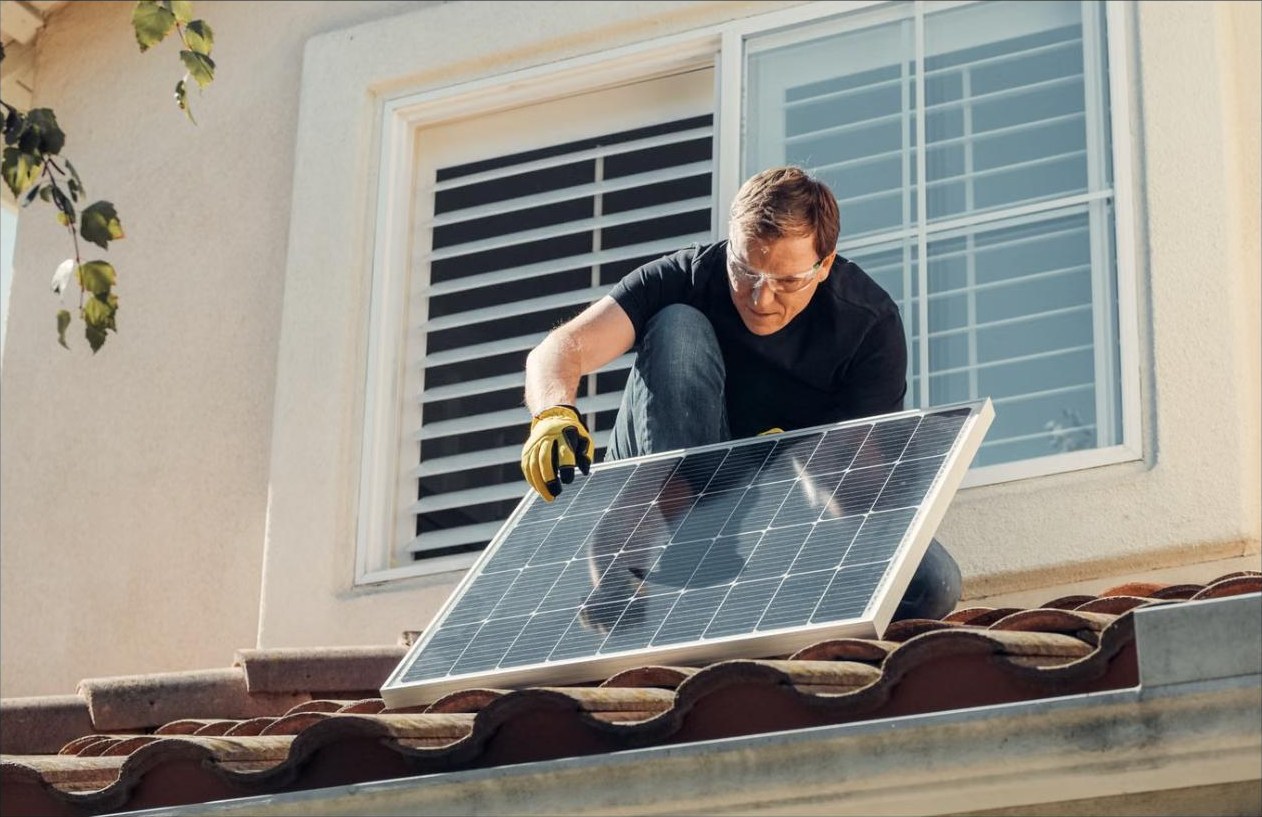
First, your budget: the panel-day
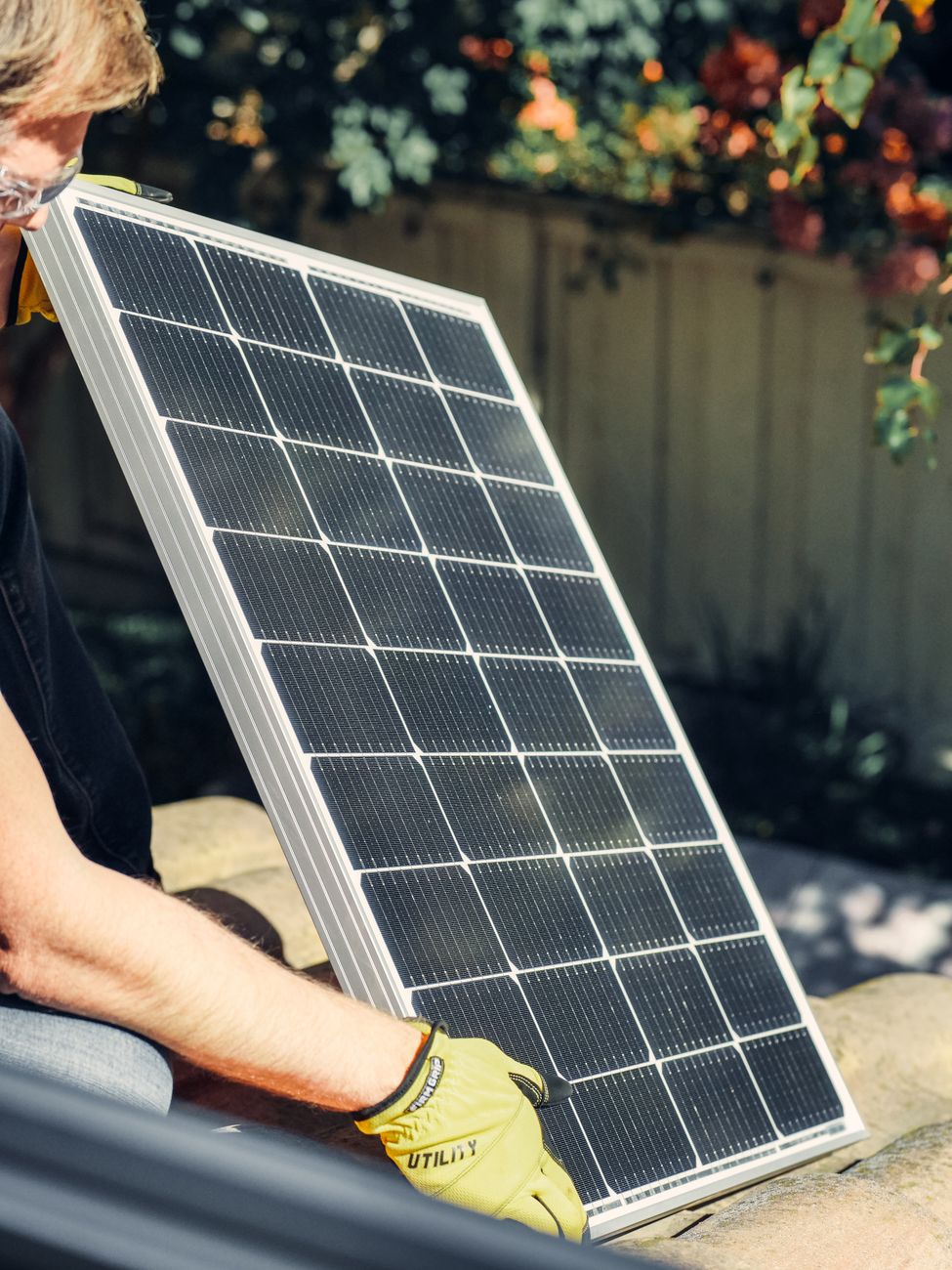
Take a new 400-watt panel with decent efficiency — roughly door-sized, the standard heart of the kits we recommend. Mounted flat against a south-facing balcony railing in typical American sun, it produces about 1.2 kWh on a decent day, averaged across the year. (Tilt it toward the sun on a stand and you can push past 1.5; face it east or west and you’ll land closer to 0.8 — vertical railing mounts give up roughly a quarter to a third of ideal output, per the published research on vertical panels.) We’ll call that 1.2 kWh a panel-day, and spend it a few ways:
The household ledger, appliance by appliance
Numbers below are for typical modern, efficient units — Energy Star models where a standard exists. Your twenty-year-old garage fridge plays by sadder rules.
The refrigerator
The panel’s great rival. An Energy Star top-freezer uses about 1.34 kWh a day, which is slightly more than a full panel-day — so one panel comes achingly close to running your fridge on sunshine, averaged over the year. Two panels clear it with room to spare.
WiFi router + modem
The perfect match. Your router sips about 11 watts around the clock — roughly a quarter of a kWh a day. One panel-day covers four and a half days of internet. If plug-in solar has a soulmate, it’s the humble router.
Laptop & phone
A rounding error, delightfully. A laptop runs about a tenth of a kWh per day and a full phone charge is under two hundredths. Your panel funds a phone charge in about eight minutes of good sun. Work from the balcony and it’s solar-powered in spirit and in fact.
TV & game console
Here’s the catch: you watch TV when the sun is down. A 55-inch set draws about 105W and a PS5 up to 200W in heavy scenes — a panel-day buys 11 hours of TV, but it earned that energy at noon while the screen was off. This is why baseload matters (next section).
Fans & window AC
Summer is when the panel shows off, because heat and sunshine arrive together. A box fan runs 20 hours on a panel-day; an efficient 8,000 BTU window unit gets a little over two hours at full tilt — and much more in real duty-cycled use. Cooling at noon is the panel’s home game.
The chest freezer
Quietly excellent. An Energy Star chest freezer needs just over half a panel-day, so a single panel runs it with change left for the router. If you buy in bulk or hunt or garden, this pairing alone can justify the panel.
Laundry & dishes
Schedulable loads are your best lever. A dishwasher cycle costs about one panel-day; a cold-wash laundry load a quarter to half. Run them when the sun is high and your panel is pouring, and they become the easiest solar wins in the house.
What it can’t do
Let’s save you some disappointment: a space heater eats a whole panel-day in 48 minutes, an EV wants fifty of them, and a standard grid-tied panel shuts off during a blackout on purpose (a safety feature protecting line workers). For backup power, pair a panel with a battery power station instead.
The secret: your panel already found its best customer
Here’s the part that makes this all work better than the ledger suggests. Researchers who put monitors on 70,000 homes found the average house draws about 200 watts around the clock doing apparently nothing — routers, fridges cycling, chargers, standby lights — what NRDC calls your idle load. That quiet hum is close to a quarter of your whole bill. And it’s the panel’s perfect customer: at midday a 400W panel is producing around 300 watts, which your idle load absorbs on the spot, no planning required. You never see it happen. The meter just turns a little slower, all day, every day.
One honest wrinkle: without a battery, solar you don’t use at the moment it’s made doesn’t get saved for later. US plug-in kits handle the overflow with smart meters that throttle the panel rather than push power out to the grid — the NREL-authored research on plug-in solar explains the plumbing. The practical takeaway is simple: the more of your panel’s output you use as it happens, the more it earns. Which is really just an argument for moving what you can into daylight:
on charge
hours
Five habits that squeeze the most from one panel
1. Face it south, and fight for every degree of tilt. A stand that leans the panel even 20–30 degrees off vertical claws back a meaningful slice of that railing penalty. If your only option is east or west, west usually wins — afternoon output overlaps better with AC season.
2. Chase shade like it owes you money. A railing shadow across one corner can drag down the whole panel’s output. An hour with the panel in a slightly odd spot beats a year of it looking tidy in a shaded one.
3. Give your delay-start buttons a job. Dishwashers and washing machines have had timers for years, waiting for a reason. Set them for late morning. This one habit converts your biggest schedulable loads into your biggest solar wins.
4. Let the always-on stuff be the plan. Don’t agonize over what to “point” the panel at — your idle load is already drinking it. If you want to grow, a second panel roughly covers a full fridge and the router, which is a pleasing thing to know during a heat wave.
5. Want evenings too? That’s a battery’s job. Kits that pair a panel with a small power station store the afternoon for the evening — movie night on stored sunshine. It changes the economics, so run your numbers in the Solar Advisor or our savings calculator first, and see the battery-included picks on our kits page.
What it adds up to
A panel-day is small on purpose — that’s what makes it legal to plug in. But small and relentless is a good combination: 1.2 kWh a day is about 440 kWh a year, worth roughly $80 at the national average rate (18.3¢/kWh as of June) — and meaningfully more where rates are high, which is exactly where the new plug-in solar laws are landing. The panel doesn’t power a thing. It powers a little bit of everything, every day the sun comes up, for 25 years. That’s the whole trick, and it’s a good one.
Sources & math: Panel output modeled on NREL PVWatts methodology (14% system losses) with the vertical-mount derate from Applied Solar Energy (2024); run your own location at pvwatts.nrel.gov. Appliance figures: Energy Star certified-product data (refrigerator 489 kWh/yr; chest freezer 215 kWh/yr; dishwasher ≤240 kWh/yr; room AC CEER 14.7), NRDC (network gear, laptop), Sony (PS5), NRDC Home Idle Load (always-on draw), EIA (household use and rates), and Energies 2025 (NREL) (how plug-in systems interconnect). A “decent day” means the annual average — June is sweeter, December stingier.
By Ben van der Veen. Solarly is independent and ad-free. No installer relationships, no sponsored picks.
 Solarly
Leave a comment