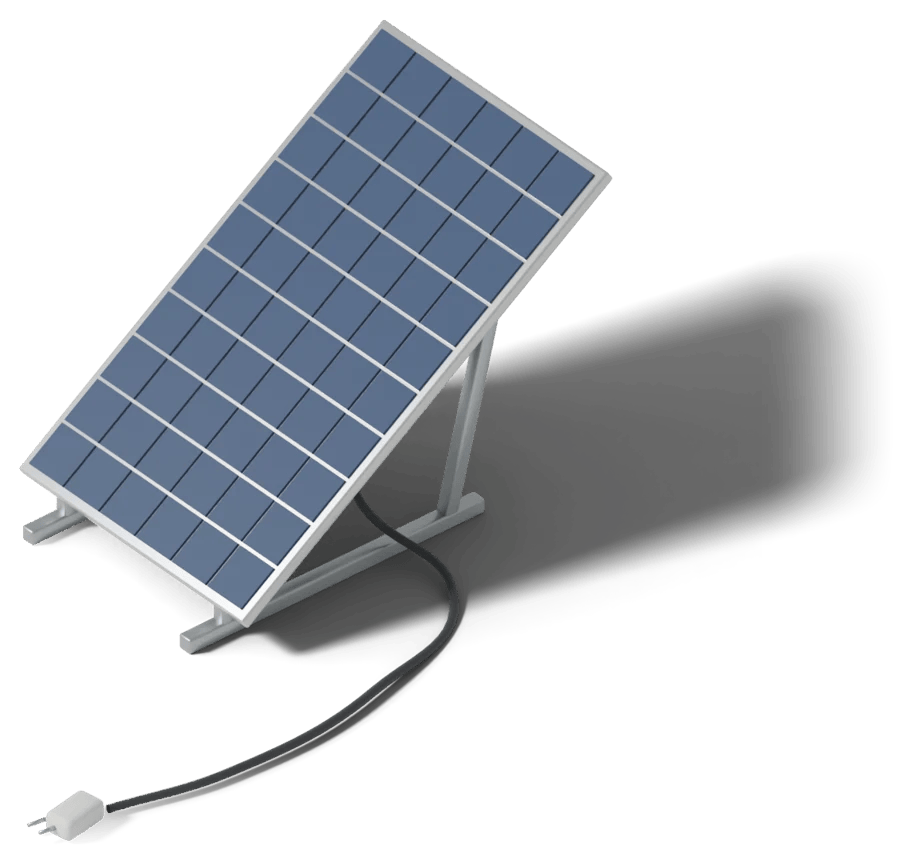
Hoymiles has released the HiFlow Pro, the first microinverter in the US built to meet the new UL 3700 safety standard for plug-in solar. That’s real, useful news. It is not, however, the same thing as the certification story we covered a few days ago, and the difference is worth understanding before you buy anything.
Update, September 19, 2026: Since this ran, CSA Group has certified two microinverters to UL 3700, the Hoymiles HiFlow Pro and the APsystems EZ1. No complete kit has been certified as a whole system yet.

Photo: Bernd Dittrich / Unsplash
Electrek reported on July 20 that Hoymiles had launched “the US’s first UL 3700 balcony solar microinverter,” and outlets from PV Magazine to Engadget picked up the same story. It’s a real milestone. But if you read our post from last week, you might be wondering how that squares with the New York Times reporting that no plug-in solar product has completed UL 3700 certification. Both are accurate; they’re describing two different things.
Compliant Is Not the Same as Certified
Hoymiles’ own press release is careful with its language: it calls the HiFlow Pro the “first UL 3700-compliant plug-in microinverter,” not the first UL 3700-certified one. That’s not a nitpick. “Compliant” means the manufacturer designed and tested the product to meet the standard’s technical requirements. “Certified” means UL Solutions, the independent standards body, has verified that for itself and issued a listing. Those are different claims, and only one of them has actually happened here.
This is exactly the distinction UL Solutions’ own VP of engineering, Kenneth Boyce, raised in the New York Times on July 31: some products get marketed as “UL compliant” because a component meets an existing or draft standard, but UL Solutions has said its certification will apply to entire systems, not individual parts, and as of that reporting, nothing had completed that process yet. Hoymiles’ own product page is a little less careful than its press release, using “certified” once alongside “compliant” elsewhere, which is precisely the kind of blurring worth watching for as more of these launch.
What the HiFlow Pro Actually Is
Strip away the certification question and the hardware itself is a legitimate step forward. The HiFlow Pro is a plug-in microinverter, not a complete kit, so you’d pair it with your own compatible panels, with a few specs worth noting:
-
Safety features
Touch-safe disconnect (drops to a safe voltage within 1 second of unplugging), automatic anti-islanding shutoff during grid outages, and what Hoymiles calls “breaker masking mitigation”, a direct response to the circuit-overload risk the NYT flagged as UL 3700’s core concern.
-
Performance
99.8% static / 99.5% dynamic MPPT efficiency, per Hoymiles. Up to four units can run in parallel across separate outlets for a combined 1,200W, depending on your state’s wattage cap.
-
Availability
Pre-order only as of this writing, priced around $150 for the microinverter alone at the one authorized retailer we checked, with shipping expected in September 2026. Nobody has one in hand yet.
Our Take
This is worth watching, not worth treating as a solved problem. A major, established microinverter manufacturer building specifically toward UL 3700, rather than waiting around, is a genuinely good sign for the category, and it likely puts pressure on competitors to follow. But “first to be built for the standard” and “first to be independently certified under it” are two different milestones, and only the first one has happened. We’d also note it hasn’t shipped yet, so there’s no independent testing or real-world use to point to.
Our standing advice hasn’t changed: today, look for UL 1741 certification on the inverter in whatever kit you’re considering; that’s the established, independently verified standard, and it’s what all three kits on our recommended kits page currently use. Treat UL 3700 compliance claims, including this one, as a promising sign rather than a substitute for certification, at least until UL Solutions actually lists something.
We’ll update our recommended kits page and this space once the HiFlow Pro actually ships and once anything completes real UL Solutions certification. For the full certification picture, see our plug-in solar guide.




Leave a comment